
By Leah Perso
It’s easy to underestimate responsibility when it seems small. A betta fish, for example, doesn’t take up a lot of space, but keeping it alive requires far more routine and obligation than one would think. I believe that everyone should have something that depends on them, even if it’s something as simple as a five-dollar fish.
We tend to think of responsibility as something we’ll learn when we take on bigger commitments, but we can start much earlier by making room in our day for something that needs us. As someone who struggles with being consistent, my fishkeeping habits have helped me create regular routines in other parts of my life, such as drinking more water, reading, and exercising.
When I was in elementary school, I used to talk to my betta fish, Kelly, as if she were another person in my room every morning before school. My parents bought bettas for my siblings and me when we were kids. Most of the fish lived for over three years, even making it through a move to another state. By the time Kelly died, talking to her had been a part of my morning routine for so long that it felt strange to get ready for the day without her. I cried for days and held her funeral and burial in our backyard. To others, she was just a small pet, but the bond between us is something that I have never forgotten.
This summer, I decided I wanted to reignite that bond and get myself another fish. It seemed like a good way to get back some of what I’d loved about having Kelly without taking on more than I could handle. I remembered how long she had lived in a gallon-and-a-half tank with no filter and infrequent water changes, but what I didn’t consider was how much of her survival I owed to luck. I had mistaken my experience with bettas for knowing how to properly care for one. I hadn’t yet understood that being responsible for a pet meant more than simply feeding it and remembering that it existed.
In July, a friend and I went to PetSmart, where my idea of a cheap and low-maintenance pet started to slowly unravel in the endless aisles of aquarium supplies. I was actively looking up what I needed on my phone as I shopped, adding a three-gallon tank, food, water conditioner, plastic plants, and cave decor to my cart. Anyone who knows anything about betta fish would be cringing at my purchases, and looking back, I am too.
Betta fish require more than a small tank and infrequent water changes; they need properly filtered, heated, and cycled water to remain healthy and active. The chemical balances in the water need to be carefully monitored and maintained, as improper levels can seriously harm a fish’s health. I finally picked out the fish himself—a betta I named Jerry in honor of my grandpa. By the time we finally left, I had spent more than I’d expected and still didn’t know how many things I was missing.
Once I got Jerry home and, in his tank, I started to research betta maintenance and care. I learned that he needed a heater and that I should have given the tank time to cycle before putting him in it. The little cave I put in gave him somewhere to hide, but it couldn’t make up for what the tank lacked. Even then, I kept coming back to the same reassuring thought: If Kelly had lived for years with less, surely Jerry would be fine.
Less than a week later, I came home from work and found him dead at the bottom of the tank.
I hadn’t expected to get attached to him that quickly. In just a few days, checking on Jerry had been the first thing I looked forward to when waking up and coming home. I liked watching him swim around the tank and explore the little space I’d put together for him. After he died, I decided that if I did get another fish, I wouldn’t do my research with a cart already half full. I upgraded the tank, bought a better filter, a heater, and live plants, then set everything up and waited for the tank to cycle. I couldn’t change Jerry’s unfortunate fate, but I could take responsibility for what I failed to do and make sure that I was better prepared for next time.
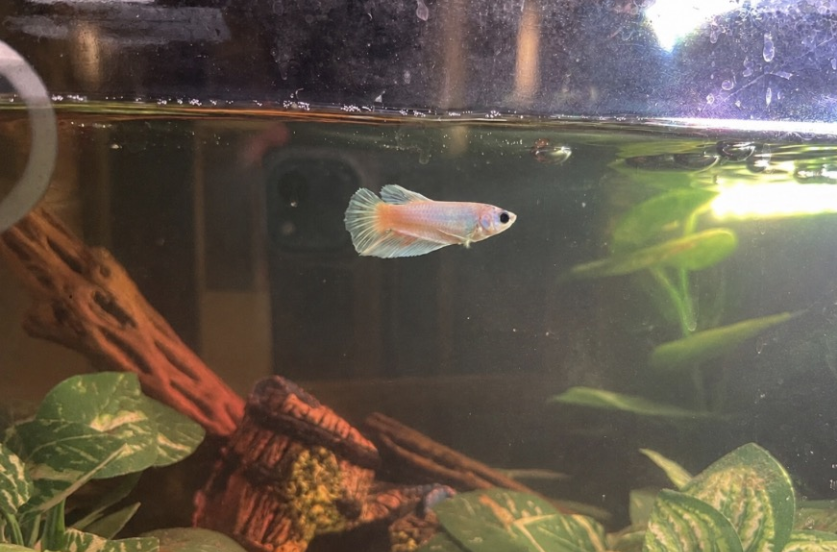
By October, I was thinking about getting cherry shrimp instead. Then, I saw a shiny pink betta sitting in one of the little cups on the pet store shelf, and I spontaneously changed my mind. I named her Betty, and now I feed her twice a day, change about 25% of her water twice a week, clean her tank once a month, and closely monitor her tank levels. I still look forward to seeing her when I come home but taking care of her means doing more than just stopping to watch her swim. It means keeping up with the same tasks even when I’m busy, tired, or would rather do something else. Unlike a lot of other responsibilities, caring for her isn’t something I can simply put off until I feel like doing it. Now that I have established a solid routine of caring for Betty into my week, I feel more productive and carry that motivation into other aspects of my life.
I don’t think everyone needs a betta fish. What I do think is worth having is something that depends on you in a small, steady way, whether that’s a pet or just a plant. It’s easy to think of responsibility in terms of the big things we might do someday, like owning a home, managing a team at work, or raising kids. Yet being dependable is also something that you practice on an ordinary day, when you’ve just gotten home from work and would rather sit down than change the water in your fish’s tank. Knowing that her survival is dependent on me is the thing that motivates me the most. I got a fish because I wanted something to look forward to when I came home, but I hadn’t considered what it would mean to be the one she was waiting for.



Leave a Reply