
By Viviana Pruett-Saratan
Staff Writer
SWARTHMORE, Pa.—Local residents from across the county attended the Delaware County Office of Sustainability’s fifth annual Sustainability Conference hosted at Swarthmore College on Friday, March 13, from 8 a.m. to 3:30 p.m. About 300 people attended the full day of networking, panels, and information sessions, which included an inside look into Swarthmore College’s own sustainability initiatives and its landmark geo-exchange heating and cooling system.
Becca Yurkovich, the sustainability officer for Delaware County, coordinated the event to bring together community members who share a passion for the environment. This year, Yurkovich emphasized the importance of “positive moments in a time of negativity.” She noted that conversations around environmental conservation have become increasingly negative under the current U.S. federal administration. Because of this, the focus of this year’s conference shifted toward community engagement, sustainable innovation, and local environmental issues.
The event began with keynote speaker Steve Ward, the project manager at Scranton Tomorrow, a community nonprofit based in Scranton, Pa. The organization integrates nature-based activities to encourage community involvement. Scranton Tomorrow has partnered with 50 local nonprofit organizations, including The Recover Bank, where Ward and individuals in recovery planted flowers throughout their community. In his presentation, Ward emphasized the importance of nature to provide hope, especially for those recovering from drug and alcohol abuse.
“There is no judgment in nature,” he said. “[Nature] teaches us that we can all have a fresh start.” In a separate interview, Ward added that he hopes people will reach out to special needs and recovery organizations to make a difference in their communities.
Following the keynote address, a plenary session was held by Anneke van Rossum, an advancement and advocacy coordinator, and Robert Routh, the Pennsylvania policy director of the Natural Resources Defense Council (NRDC). They spoke about the rising impact of AI data centers, as Pennsylvania has become a concentrated area for data center development. This increase in development can cause noise, air, and water pollution, lead to blackouts, and consume conservation lands. Perhaps the biggest concern regarding these centers is the permanency of zoning laws.
“If the industrial zone gets approved, it cannot be changed back to an agricultural, communal, or residential zone,” Rossum explained. This means land approved for a data center—whether it is built or not—cannot be used for any other purpose, potentially depriving the community of green space and land conservation forever.
Following the main presentation, participants gathered in the Eldridge Commons Science Center for an hour-long networking session. About 30 local nonprofits, sustainability-focused businesses, and community organizations promoted sustainable development and volunteer opportunities. Yurkovich stressed that volunteering is the most effective way to enter the field. “The best way [to get involved] is to volunteer,” she said, noting that she secured every professional position she has held through volunteering and networking.
After a lunch provided by Swarthmore College, the conference concluded with two rounds of breakout sessions. Participants chose from a variety of informational tracks, including a “Zero Waste panel,” a “Community Projects Lightning Round,” and tours of Swarthmore’s zero-waste features and geo-exchange system. During the lightning rounds, community leaders spoke about local initiatives ranging from “bioblitzes”—where members photograph local species—to imperative conservation efforts like salt stream sampling and responsible technology recycling.
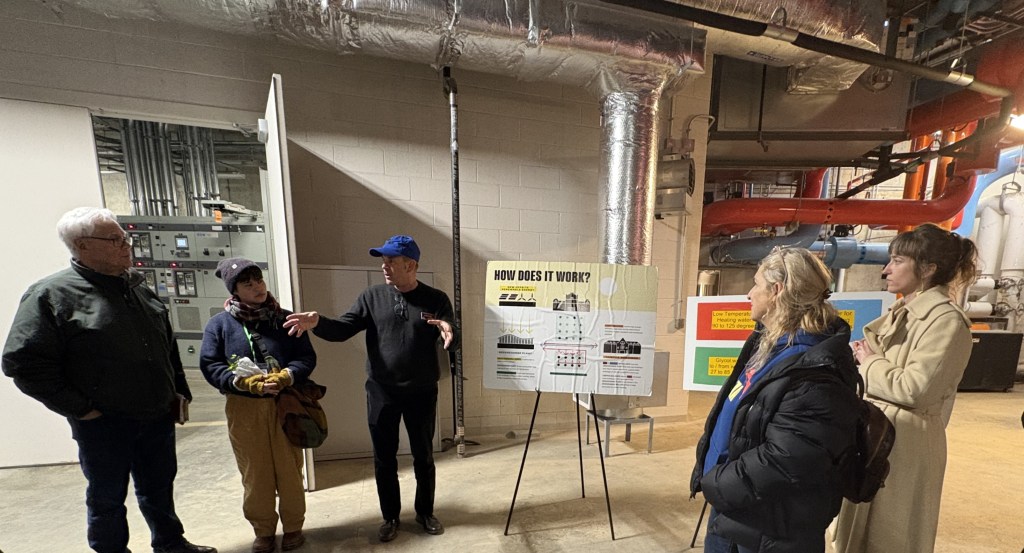
Swarthmore College’s Office of Sustainability also showcased its “To Zero By Thirty Five” program, which aims to make the campus zero-waste and carbon-neutral by 2035. Participants toured the geo-exchange plant located under the Dining and Community Commons. The project team explained that the system works as a closed water heating and cooling loop. This multi-million dollar project replaces a failing steam energy system built in 1912 that relied on natural gas combustion.
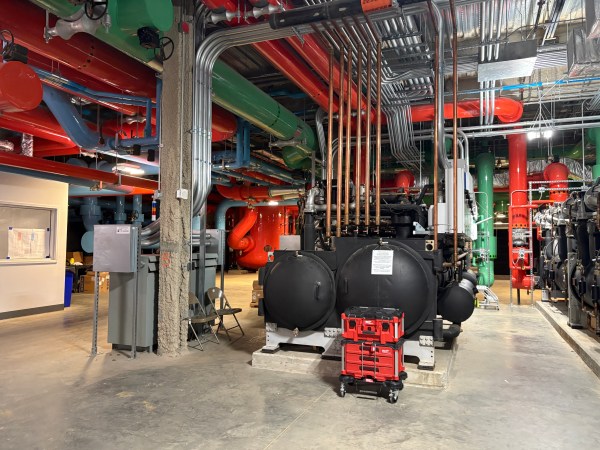
The new system relies on solar power and heat-recovery chillers to extract heat from buildings during the summer. That heat is then stored in 700 energy wells located 800 feet underneath Parrish Lawn. The earth’s temperature acts as thermal storage until winter, when the heat is extracted to warm the buildings. Thomas Cochrane, a senior project manager and tour guide, explained that while the conversion from the 1912 steam system is a challenge, the new model is expected to be significantly more efficient.
The conference provided attendees with a variety of inspirational models for local sustainability. The Delaware County Office of Sustainability has more events planned for the coming months, including an Earth Day celebration at Rose Tree Park on April 18. More information on the county’s upcoming policy changes and initiatives can be found on their official website.



 The Communitarian
Leave a comment