
By Dominic DiIorio
Staff Writer
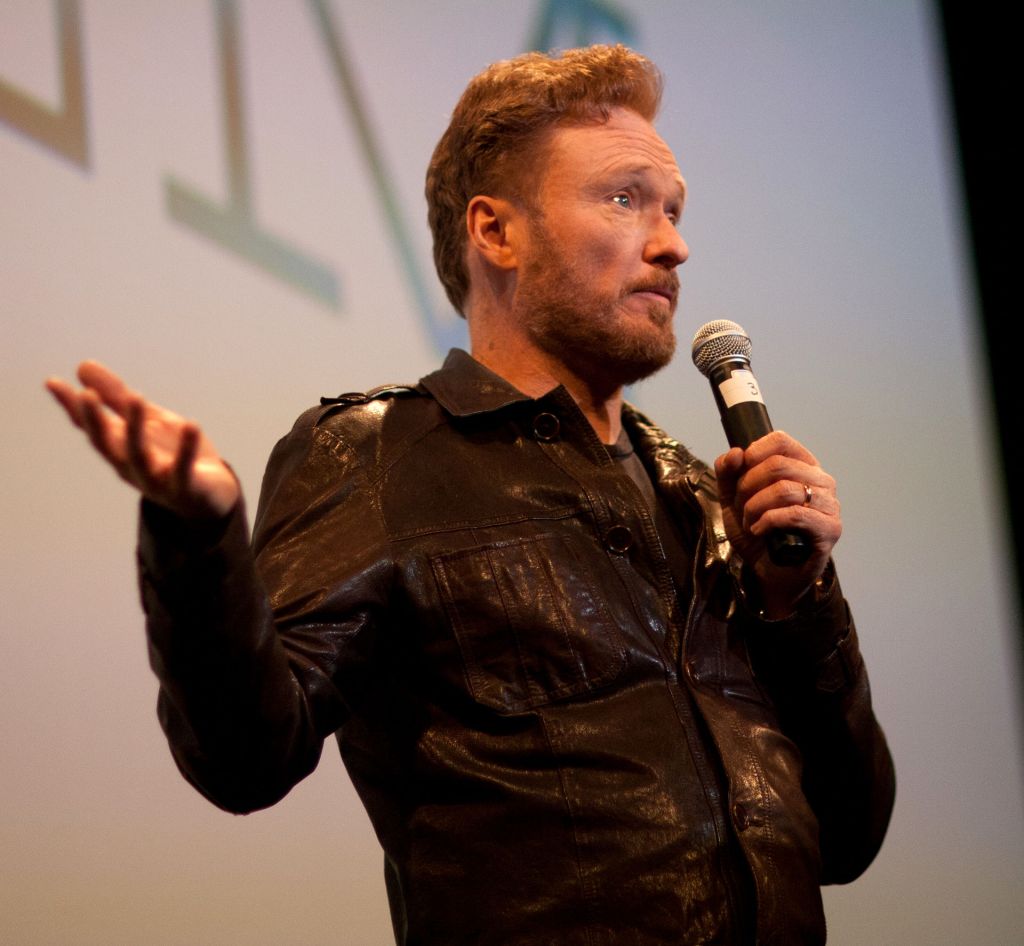
Ever since Conan O’Brien first hosted the 2025 Academy Awards, critics and viewers have largely agreed on one thing: He understood the assignment. O’Brien brought a level of depth to his comedy that was equal parts playful and reverent, allowing him to balance poking fun at
Hollywood while still honoring it. His debut was described as brilliant, and Time critic Judy Berman praised his ability to balance “impish humor with a palpable love for movies.” This success led to O’Brien’s return for the 98th Academy Awards this year, which felt less like a gamble and more like a natural encore. Now that the 2026 Academy Awards has concluded, it is safe to say O’Brien did not just repeat what worked—he refined it.
As soon as O’Brien stepped onto the Dolby Theatre stage, he made it clear he was commanding the night. His opening line was an immediate tone-setter: “I’m Conan O’Brien, and I’m honored to be the last human Oscars host.” Already, he was setting a standard for comedy that is self-aware, topical, and absurd in a way that feels fresh. It is a joke that encapsulates O’Brien’s strengths. He is an effective host because he is experienced in the role and does not shy away from it. Having hosted his own late-night programs for decades, he understands the art of avoiding cheap laughs or constant shock value. Instead, he builds humor with layers rooted in cultural observation. The “last human host” line worked because it tapped into contemporary anxieties about AI that resonated with the audience and viewers worldwide.
O’Brien immediately followed the line with a barrage of jokes aimed at nominees and industry trends, proving that no one was safe. One highlight was a playful jab at Timothée Chalamet and his recent comments about opera and ballet being dying art forms. “Security is extremely tight tonight,” O’Brien said. “I’m told there’s concerns about attacks from both the opera and ballet communities.” It was a classic O’Brien joke—absurd and niche, yet delivered with enough confidence to invoke laughter even from those unfamiliar with the reference. Perhaps the most impressive aspect of his style is his display of restraint. Hosting the Oscars requires walking a thin line between entertaining a room full of Hollywood stars and the millions watching on television. O’Brien successfully navigated this path, noting before the show that humor must be “funny without tipping into anger or politics.”
This year, the Academy Awards provided O’Brien with a plethora of headlines for jokes on controversial topics, but his delivery always felt calculated and rarely reckless. His humor lands because it isn’t cruel. He presents fragments of a concept without voicing a malicious opinion that might sour the experience. Many hosts forget to bring humility to the stage. While the Oscars are sometimes viewed as a showcase for politics or heavy-handedness, O’Brien reminded the audience that it doesn’t have to be that way. Instead of tearing people down, he finds ways to invite them into the joke, often making himself the punchline. He is the king of self-deprecation, and that is key to his appeal. Even in a room of A-list celebrities, O’Brien never tries to outshine them. He acts as both a guide and a translator between Hollywood and the audience at home.
O’Brien stands out among modern hosts due to his natural ability to write for a broad audience. He has a deep understanding of different demographics and knows how to placate them. While there are obvious jokes that get immediate laughs, his performance included subtler bits referencing film culture, industry quirks, and internet humor. For example, his live “meme” moment with Leonardo DiCaprio, where he captioned the actor’s expression in real time, was a direct nod to younger audiences. This multi-layered approach is no accident; O’Brien’s extensive background in writing for “The Simpsons” and “Saturday Night Live” requires jokes that work on several levels. That training shows in his pacing and his knowledge of when to escalate a bit or when to let a joke breathe.
At the heart of O’Brien’s success is his comedic persona: silly yet intellectually sharp. He thrives on the contrast, delivering highbrow references through a lens of lowbrow goofiness. While his tonal shifts keep the audience engaged, there is sincerity beneath the absurdity. He closed his monologue with a heartfelt reflection: “We pay tribute tonight… to optimism.” It was a difficult transition to pull off, yet O’Brien made it feel natural. It served as a reminder that he isn’t just there to entertain; he is there to frame the significance of the event.
Compared to his 2025 performance, O’Brien appeared more confident and relaxed this year. Last year, there was a sense he was trying to prove himself; this year, he simply became the host. Critics and viewers again noted his ability to balance “sharp and sweet,” with humor that occasionally bites but never overwhelms. While some critics took issue with the length and pacing of the 2026 ceremony, they frequently singled him out as the highlight. The Los Angeles Times even noted that his “hits-to-misses ratio was good or better than your average Saturday Night Live episode.”
Why does Conan O’Brien succeed where many Oscar hosts struggle? He respects the audience, assuming viewers are smart enough to follow layered jokes but generous enough to enjoy simple ones. He also respects the individual moments. Even at his most irreverent, he never forgets that the Oscars are a celebration of film. His performance is rooted in great comedy writing—jokes that feel constructed rather than like improvised filler. O’Brien’s 2026 performance is a reminder that great hosting is not a lost art. It isn’t about dominating the stage; it’s about guiding the audience through it.
O’Brien is the ideal modern host. He is intelligent without being pretentious and silly without being shallow. He has turned silliness into a science, remaining sharp without being mean. His comedy reflects a deep understanding of both Hollywood and the people watching from home. In an era where award shows struggle to stay relevant, O’Brien offers something rare: an unapologetic fool who embraces the role. His comedy builds bridges between generations and sensibilities. He makes it look like he’s just having fun, and perhaps that is the real achievement—the idea that something so carefully crafted could feel so effortlessly human.
Main Photo: Gage Skidmore / CC BY-SA 2.0

 The Communitarian
Leave a comment