
By Macady Amparan
Staff Writer
Colleges and universities have a responsibility to provide necessary resources to anyone who may find themselves in situations that are uncomfortable or life-threatening, especially if the behavior occurs on campus grounds.
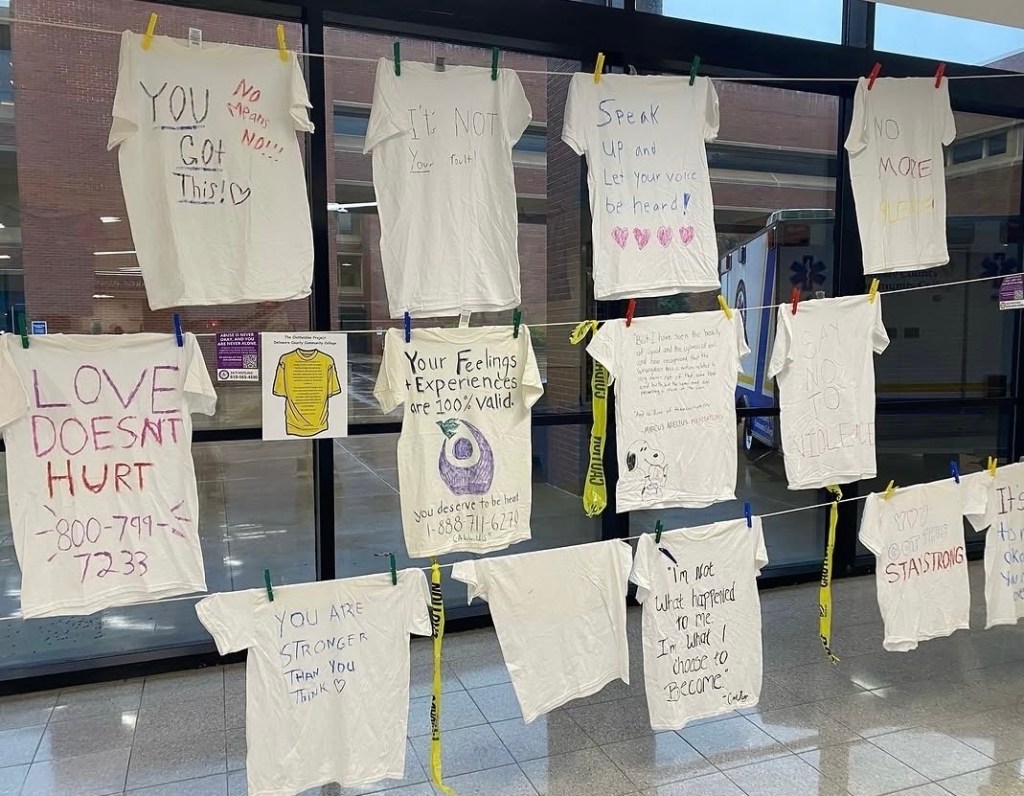
At Delaware County Community College, advocacy takes many forms. For the past six years, the college has participated annually in The Clothesline Project, which raises awareness about domestic and sexual violence. The project gives those affected by domestic violence the opportunity to design a t-shirt expressing support for women who have been victimized.
Developed in 1990 by visual artist Rachel Carey-Harper, the project was inspired by the power of the AIDS Memorial Quilt. Carey-Harper presented the concept of using shirts hanging on a clothesline as a vehicle for raising awareness. This evolved into a creative outlet for women to tell their stories in unique ways and serves as a reminder to those suffering in silence that they are not alone.
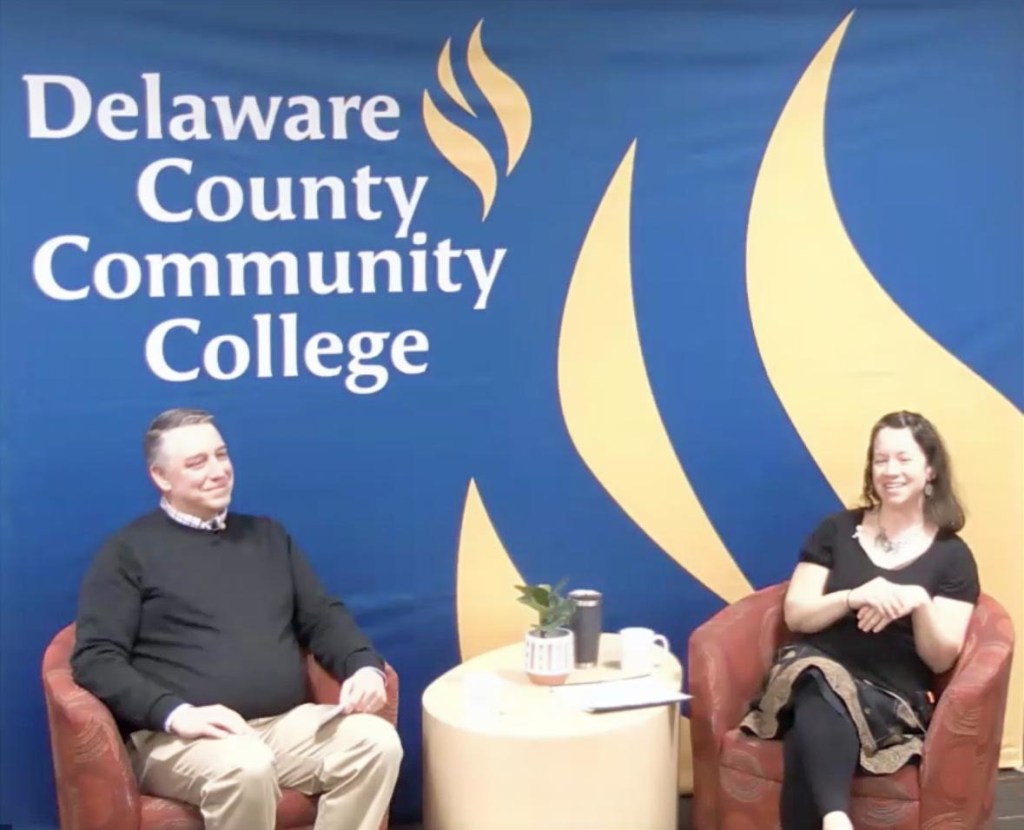
Chris Doyle, a counselor and associate professor at DCCC, has seen the impact of the initiative firsthand.
“The programming that I have participated in at the college is really about raising awareness and letting our students and the community know that there are resources available and being empowered to fight these types of things,” Doyle said. “This project has been successful in raising awareness and getting people talking about a subject that is sometimes taboo to talk about. Advocacy plays a big role in that.”
The Clothesline Project events for this semester will all be held from 11 a.m. to 1 p.m. at several locations: Thursday, April 2, at the Marple Campus; Tuesday, April 14, at the Downingtown Atrium; Thursday, April 16, at the Southeast Center; and Tuesday, April 21, at the Pennocks Bridge Learning Commons.
April is recognized nationally as Sexual Assault Awareness Month (SAAM). The month aims to raise awareness about sexual and gender-based violence through education, prevention and survivor support.
In addition to the Clothesline Project, the college has hosted the “Speak About It” program, which emphasizes the importance of active consent. DCCC also maintains an ongoing partnership with the Domestic Abuse Project of Delaware County to provide programming and information on campus.
While DCCC continues to strengthen its local resources, a broader cultural shift regarding dating violence is occurring on college campuses nationwide. At many other institutions, professors are implementing “Lauren’s Promise” directly into their syllabuses. The pledge is simple: “I will listen and believe you if someone is threatening you.”
Supporters of this national movement say the pledge is an effective way for educators to communicate their commitment to student safety, providing a foundation for a trusted environment that extends beyond academics.
The promise honors Lauren McCluskey, who was 21 years old in 2018 when she was murdered on her college campus by an ex-boyfriend. Her death followed months of harassment and multiple attempts to seek help from campus security. In her honor, her family is committed to spreading awareness about proper safety training to prevent similar tragedies.
“Lauren’s Promise is an extremely efficient way for universities to put into place a small step which will help change the culture on their campuses,” said Linda Mittelhammer, director of community relations at the Lauren McCluskey Foundation.
To date, roughly 466 universities worldwide have made the pledge. Implementation elsewhere is considered a crucial step in establishing a safe environment and reinforcing the reliability of campus administration.
“The whole culture has to be changed and that’s what Lauren’s Promise is all about,” Mittelhammer said. “It’s saying, ‘We are receptive and we’re going to believe you and connect you with help.’”
Lauren’s Promise is not exclusive to administrators or faculty. Anyone can make the pledge for free by visiting the foundation’s website. Those who pledge become advocates for victims of relationship violence, promising to listen, believe and connect survivors with the support they need.
Although DCCC has not yet formally adopted Lauren’s Promise, the national movement highlights a growing standard for campus accountability that mirrors the goals of local events like The Clothesline Project. By observing these broader shifts in campus culture, the college continues to evaluate how to best foster an environment of care, ensuring that students across all campuses have the awareness and support they need to thrive.

 The Communitarian
Leave a comment