
By Dominic DiIorio
Staff Writer
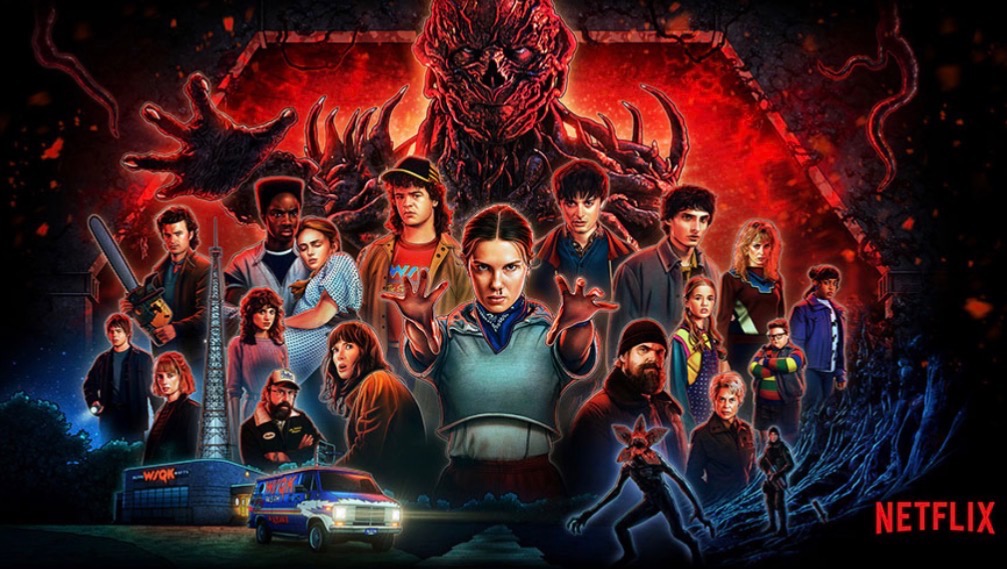
“Stranger Things” first premiered on Netflix on July 15, 2016. Ever since the show’s release, no one—not even the creators—could have predicted the impact it would have on the world. It became one of the biggest and most significant cultural phenomena in modern television. Nearly a decade later, following the series finale on Dec. 31, its everlasting impact is already hitting die-hard fans and coming into sharper focus each day. What started as a supernatural mystery set in a small Indiana town eventually evolved into one of the most influential and widely watched modern shows, reviving an entire decade’s aesthetic and redefining how audiences emotionally engage with streaming storytelling.
Any fan or individual who has watched the show can tell you about one of the most visible elements of its legacy: the revival of 1980s nostalgia. “Stranger Things” did more than reference a bygone time; it gave a whole new generation a look into a world they never experienced firsthand. It showcased the decade through a lens that was as bold as it was retro, utilizing daring color palettes and vintage fashion to highlight arcade games, old movie posters, toys, hairstyles, analog technology, and more. The show acted as a cultural gateway for many fans. Cultural commentators have described the series as a “time capsule that made the 1980s feel emotionally accessible rather than distant.” This allowed younger fans to relate and connect with the decade while older viewers were reminded of their childhoods, feeling a powerful sense of recognition to a time they now share with their own children. The focus on the 1980s contributed greatly to the show’s success, fueling a revival that extended beyond television screens and into clothing brands and annual Halloween costumes.
While the 1980s setting provided many iconic qualities, perhaps no single example better illustrates the show’s cultural reach than its impact on music. The series brought renewed attention to a golden age of classic songs that many young fans today had never heard. One striking example was the re-emergence of “Running Up That Hill” by Kate Bush. Even decades after its original release, the song returned to global charts following its use in the show, becoming one of the most-streamed songs of its era. Bush herself was shocked by the renewal, saying she was “blown away” by how a new generation embraced the emotional core of her song. The instance was more than just a nostalgic reminder; it was a highlight for “Stranger Things” that demonstrated an active reshaping of the past, giving older art renewed relevance through effective modern storytelling.
Apart from its nostalgic aesthetic and blockbuster horror storytelling, a major part of what makes “Stranger Things” a cultural phenomenon is the cast and the characters they brought to life. The story is nothing without its iconic central group. One obvious highlight is Eleven, played by Millie Bobby Brown, a character who has become a pop culture icon. From the aesthetic of her shaved head in the early seasons to her gradual shift from quiet emotional intensity to finding a sense of belonging, her journey resonated deeply with audiences.
The main group—consisting of Mike Wheeler (Finn Wolfhard), Lucas Sinclair (Caleb McLaughlin), and Dustin Henderson (Gaten Matarazzo)—captured the awkward sincerity of adolescence. Their acceptance of an outcast like Eleven highlighted themes of friendship and acceptance that go beyond the 1980s setting; these are universal elements of the human experience. This connection makes the sci-fi horror elements more terrifying because the audience is genuinely invested in the characters’ safety. Simultaneously, the show gave veteran actors like Winona Ryder, who plays Joyce Byers, a career resurgence, introducing her to a new generation while reinforcing the show’s 1980s influences through an actor who was a star during that decade.
The show also brought immense care to its supporting characters, most notably Steve Harrington (Joe Keery). Steve became one of the most beloved characters in the show through an unexpected arc; starting as a stereotypical high school bully and minor antagonist in Season 1, he evolved into a caring, protective, and honest mentor figure. The chemistry among the cast members, who essentially grew up together during the production, translated into authentic on-screen bonds. This human vulnerability strengthened the show’s emotional core, proving that its legacy rests as much on characters audiences care about as it does on monsters and nostalgia.
Cultural impacts were certainly important for the show’s popularity, but “Stranger Things” also reshaped expectations for what streaming television could achieve. Across its five seasons, the billions of hours of viewership are undeniable, making it one of the most-watched series in Netflix history. Each season’s release felt less like a routine drop of episodes and more like a global event, dominating social media and reviving something that streaming often lacks: communal viewing. In an era defined by individualized algorithms and fragmented attention, the show proved that serialized television can still create shared emotional moments and widespread conversation. The series finale was even released in theaters for a limited two-day run, generating $25 million to $30 million in theatrical revenue.
That sense of investment remains even after the show’s conclusion. As with any major cultural work, the finale prompted intense debate. Some fans praised its emotional resolution, while others questioned creative choices or speculated about alternate meanings. The show gave new meaning to fan theories, with some viewers even suspecting there was a secret final episode hidden by the creators, the Duffer brothers. Cast members are frequently asked about these theories in interviews; actor Caleb McLaughlin dismissed them outright, stressing that the creators intended the ending to be conclusive. The Duffer brothers have highlighted that the story they envisioned was always meant to end the way it did, as a complete journey rather than an endlessly extensive franchise. The fact that the conversation continues nearly two months after the finale shows how much the series resonated with its fanbase.
The show’s influence also extended into the real world in tangible ways. Its production contributed significantly to local economies in filming locations across the United States, creating thousands of jobs. Beyond television, the “Stranger Things” universe expanded into theater, merchandise, and immersive experiences, including the opening of “Netflix House.” These developments demonstrate that its storytelling power could translate across mediums. Stage productions and future adaptations, such as the cartoon “Stranger Things: Tales From ’85,” further cement the show’s place as a lasting intellectual and cultural property.
At its core, however, the legacy of “Stranger Things” is not about monsters or alternate dimensions; it is about the bonds we form. It is about growing up and the fear of loss that accompanies major change. The supernatural elements serve as a backdrop for deeply human stories about friendship, identity, and resilience. Critics have frequently stated that what made the show truly special was the way it tied childhood emotional sincerity to moments of quiet connection, horror, and spectacle. As time moves on, “Stranger Things” will likely be remembered as one of the defining television series of its era. It helped reshape the identity of streaming television and serves as a successful model of modern storytelling. Although the gates to the Upside Down may be closed, the stories of Hawkins, Indiana, and the characters who reside there will continue to echo well beyond the screen.


 The Communitarian
Leave a comment