
By Dominic DiIorio
Staff Writer
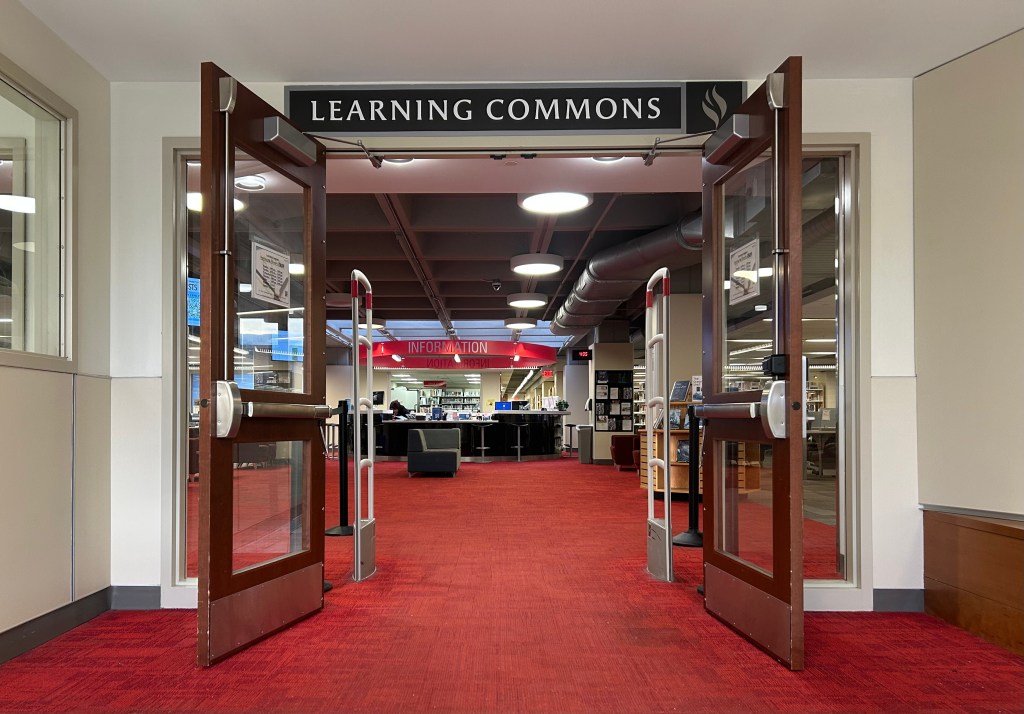
The Delaware County Community College Learning Commons is continuing its “NextGen Digital Literacy Series” this spring with upcoming sessions focused on data privacy and local journalism. Launched last fall, the series aims to provide students with the practical tools necessary to navigate the vast sea of information found in today’s digital world.
The next event, scheduled for Feb. 25, will feature Penn State librarian Sarah Hartman-Caverly. The discussion will focus on why students should prioritize protecting their personal data, specifically addressing corporate data collection and the risks of artificial intelligence. On April 16, the series will shift focus to local journalism. That event will bring in local reporters to discuss how information and storytelling shape a community’s understanding of current events and promote civic engagement.
The series began on Wednesday, Nov. 12, with an inaugural session titled “Counting What Counts: Why Public Data Matters.” The 55-minute discussion, held in the small auditorium on the Marple Campus and broadcast via Zoom, featured Dr. Laura Crispin, an economist at Saint Joseph’s University.
Librarian Ellie Goldberg introduced the session by explaining that the series marks a long-term effort by the Learning Commons to strengthen students’ digital literacy skills. To encourage engagement, the event included logistics for students to complete feedback surveys for course credit and submit questions both in person and through the digital platform.
During the main discussion, Crispin highlighted how data collection has become an unceasing and often invisible part of daily life. “Everything is data right now,” Crispin told attendees. “Every time you scan something, someone is collecting that data.”
Crispin explained that data that is publicly available often comes from federal, state, and local government agencies. She cited organizations like the U.S. Census Bureau, the Centers for Disease Control and Prevention (CDC), and the Bureau of Labor Statistics (BLS) as primary sources. These agencies track vital information relating to housing, health, labor, education, demographics, and immigration.
In her own work, Crispin utilizes these datasets because of their nationally representative background. Rather than surveying every individual in the country, researchers rely on carefully selected samples to analyze broader societal trends. One specific dataset she highlighted was the American Time Use Survey (ATUS). This survey chronicles how people spend their time over a 24-hour period, including their location and who they were with.
“They ask respondents to chronicle their entire day,” Crispin said. Using this information, she studied how students’ time usage changed during the COVID-19 pandemic. According to Crispin, many popular assumptions about remote learning did not match the reality seen in the data.
“What we thought we were doing, we were not doing,” she said. The data revealed that lower-income students were disproportionately affected by the pandemic due to limited access to technology and increased family responsibilities. Crispin stressed that these issues might never have been realized without detailed data analysis. “Without this data, we wouldn’t be able to know,” she added.
The discussion also touched upon the rigorous process behind government data. To calculate the Consumer Price Index (CPI), for example, the Bureau of Labor Statistics sends trained employees to stores across the country to record prices for specific goods.
“These are civil servants,” Crispin said. “It’s a completely nonpartisan organization.” She noted that the data undergoes multiple levels of audits and verification before it is published, usually with a delay of one to two months to ensure accuracy.
A major concern raised during the event was the impact of government shutdowns on data collection. Crispin explained that federal websites often display notices during furloughs stating that data has not been updated.
“If that data’s not being collected, then they don’t have any data,” she warned. “So they’re kind of going with their gut.” She emphasized that missing data can never be recovered. “That’s permanent. You can’t retroactively gather data.”
The conversation in November directly paved the way for the upcoming spring sessions. Questions regarding corporate data collection by companies like Amazon and Google led to a discussion on the ethics of transparency and informed consent. Crispin noted that while some corporate data is proprietary, aggregated data—such as regional search trends—can be useful without exposing individual information.
“Are you making an individual person’s searches publicly available? That feels invasive,” Crispin said. “As long as it’s collected ethically and responsibly, then I guess that’s the line.”
The upcoming session on Feb. 25 will further explore these concerns, particularly the growing influence of artificial intelligence. Crispin issued a clear warning to students about relying on AI for research.
“Do not go to ChatGPT to get your data,” she said. “It’s a probability model. It will make up information.” She reminded students that they are the ones responsible for properly verifying their own sources. “If you say something that’s totally wrong, that reflects badly on you.”
The final event on April 16 will transition the focus to local journalism. It will highlight how data and reporting can affect public awareness and community accountability. This session aims to show students how storytelling and factual information work together to shape public understanding.
When asked how students should practically use public data, Crispin recommended government data explorers and library resources like Statista. She described Statista as a user-friendly tool that offers a range of graphs, infographics, and links to credible sources.
Goldberg concluded the fall event by encouraging students to make use of the Learning Commons’ resources and to attend the future installments of the series. Flyers for the February event were distributed, and Zoom registration has already opened to allow students to plan for the upcoming semester.
“If you need data and it’s behind a paywall, talk with your librarian,” Crispin advised. “That’s usually how I get my data.”
The NextGen Digital Literacy Series continues to serve as a vital resource for the DCCC community, ensuring that students are prepared to navigate the complexities of information in the real world.



 The Communitarian
Leave a comment