
By Viviana Pruett-Saratan
Staff Writer
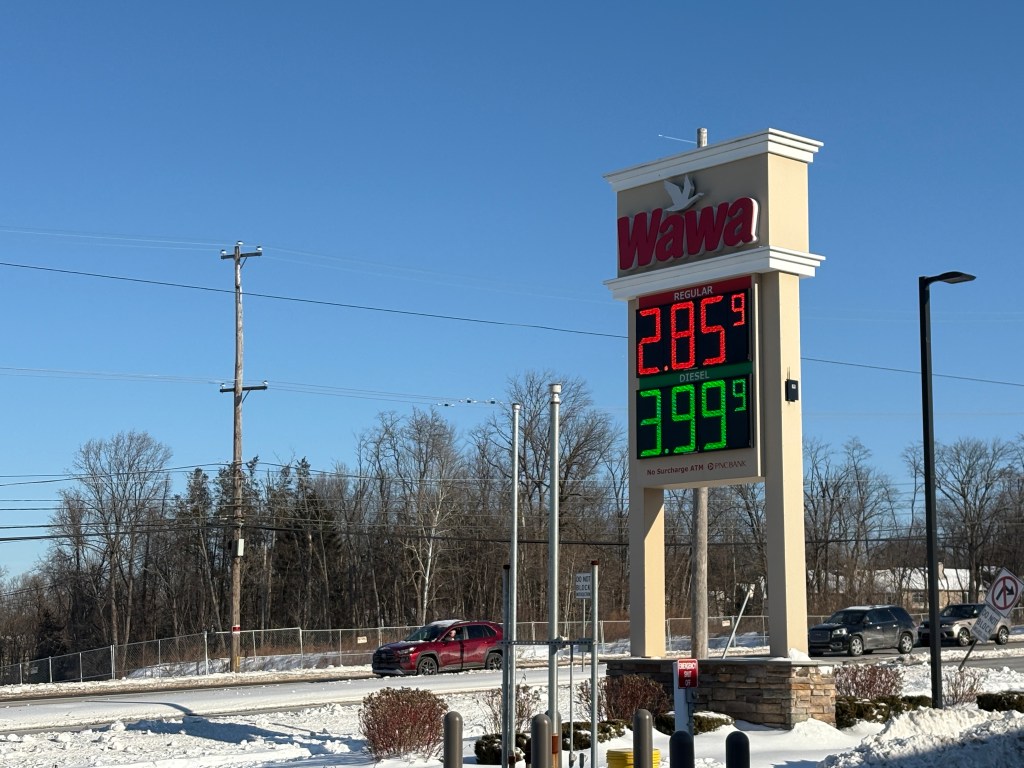
Gas prices are at a new low, giving student commuters some financial relief as they head into the spring semester. Currently, gas prices in the Delaware and Chester County area are just below $3.00 per gallon for regular gas, with some local stations as low as the $2.60s. This is a major difference for commuters from the fall semester, when prices were above $3.00 for a gallon of regular gas.
According to the American Automobile Association, the national average for gas is at $2.83, while Pennsylvania lies at $3.02. This is the lowest it has been since 2021 and is down by almost 10% since last year. Analysts at GasBuddy say American households spent about $177 less in 2025 than 2024 on fuel, and that figure is likely to go down further in 2026.
The low gas prices are due to many factors, including an oversupply of domestic crude oil, global politics, and standard seasonal gas fluctuations. Since October 2025, the Energy Information Administration reported that the U.S. produced about 429,983 barrels of domestic crude oil that month, producing more than what was currently in demand.
The Trump administration plans on drilling for even more oil than what is needed. In addition to domestic products, issues in Venezuela are also expected to contribute to the decline of gas prices. The Trump administration has seized many Venezuelan oil tankers in the past few months, making changes to the global oil market. The administration plans to produce even more oil from Venezuela. If Venezuela has a regime change in the near future and the U.S. lifts sanctions, it may contribute to decreasing prices further in 2026. Chief Investment Officer Dan Pickering of Pickering Energy Partners predicts in a recent report that Venezuelan oil “would be a positive on the margin for U.S. gasoline consumers and the U.S. refining system.”
Another reason for the low gas prices is the winter gasoline blend, which is cheaper than the summer fuel blend. The AMSOIL company explains that the summer blend of gas contains 1.7% increased energy to accommodate higher temperatures. The summer blend requires higher energy because of the Reid Vapor Pressure, or RVP. RVP measures how easily gas evaporates depending on the outside temperature. The higher the temperature, the lower the RVP needed to run the car.
In the winter, due to the cold temperatures, the gas requires less energy but increased RVP. The evaporation rate must increase to get the car to start and run smoothly. This blend is less rich in oil and instead requires high amounts of butane—a less expensive, highly flammable hydrocarbon gas containing high amounts of RVP. This change in gasoline composition is economically beneficial for all commuters, providing relief in their winter budget.
The gas prices are likely to go up in the spring when the temperature warms, the gas composition changes, and the demand for spring break travel increases. For now, Delaware County Community College commuters will be saving some money from this dip in gas prices.



 The Communitarian
Leave a comment