
By Lydia Kirkpatrick
Staff Designer
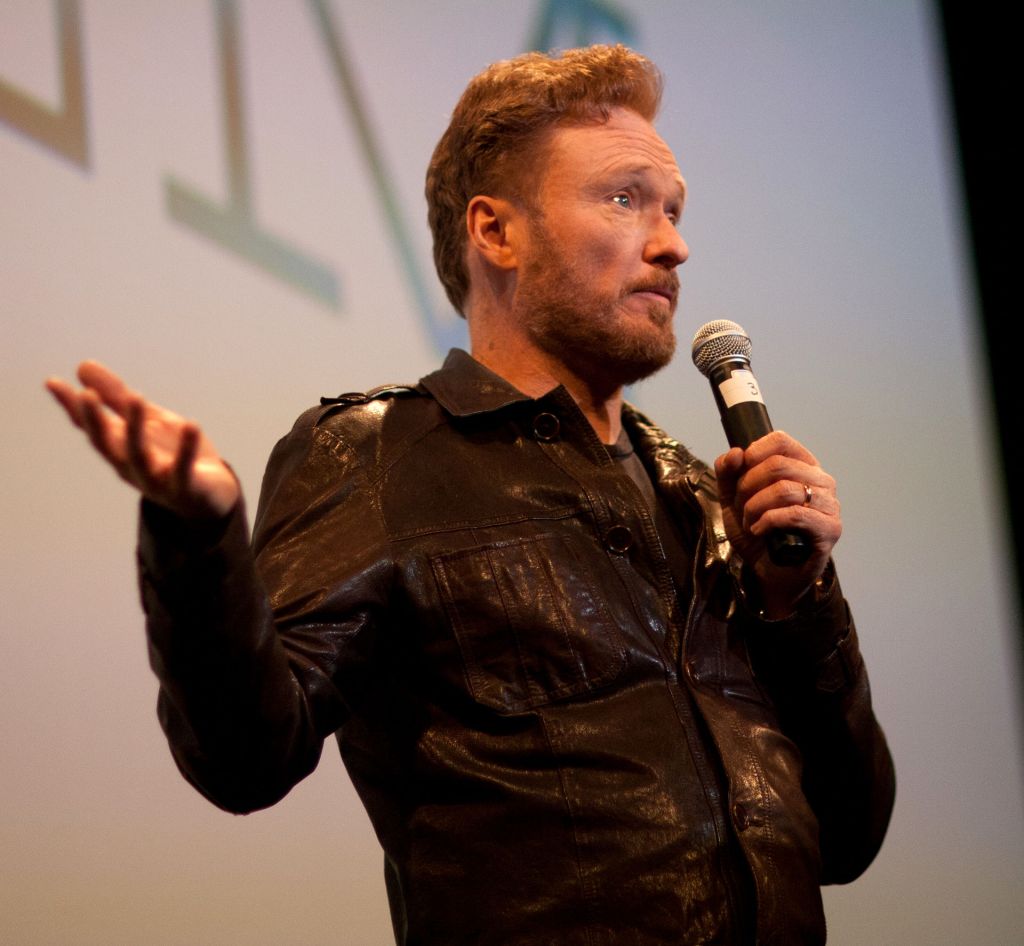
MARPLE, Pa. – Family, friends, students, and faculty gathered in a large auditorium at Delaware County Community College on Nov. 6 to hear Professor Jaime Brett Treadwell discuss his progression as an artist and the inspiration behind his solo exhibition, “Dimensions.”

Photography By Greta Motter
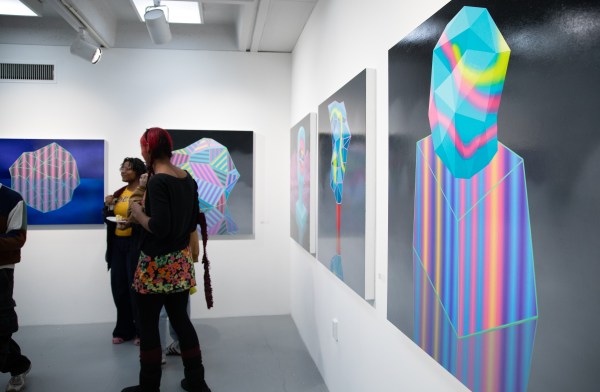
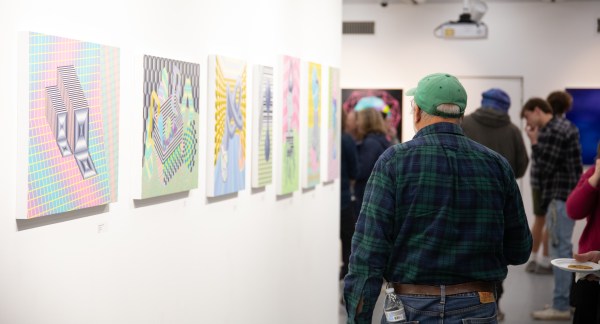
The talk celebrated the opening of “Dimensions,” a collection of more than 12 years of Treadwell’s work. Treadwell is a professor of art and design and the coordinator for the Foundations & Studio Art programs at DCCC. The show will be on display in the college’s Art Gallery from Oct. 27 to Dec. 5, 10 a.m. to 5 p.m.
Associate Professor of Art History Olivia Gruber Florek, who curated the exhibition, opened the reception with a brief introduction. She credited those who made the event possible: President, Dr. Marta Yera Cronin; VP of Academic Affairs, Dr. Marian McGorry; Dr. Robert Jones; Gretta Motter, Bethany Riley; Caitlin Flaherty; and numerous internal organizations.
Professor Treadwell began his talk by showing a newspaper clipping of him, freshly graduated from State University of New York (SUNY) in 1999, painting mobile homes on a plein air easel. He went on to speak about his time in his graduate program at the University of Pennsylvania, experimenting with different mediums such as animation, sculpture, and video editing. He took viewers on a walk through his artistic journey, showing pieces from his early years and how they evolved over time to the distinct style we can see today.
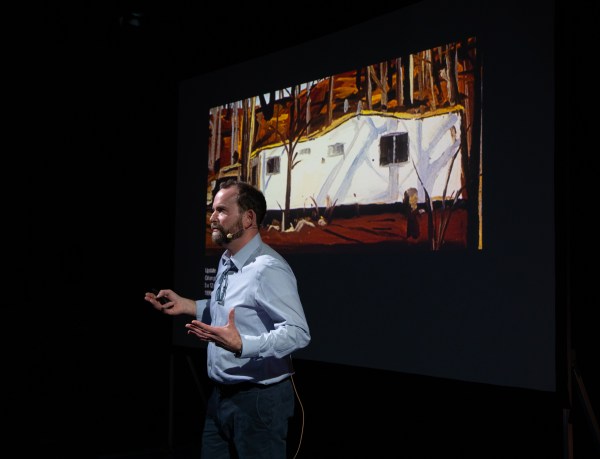
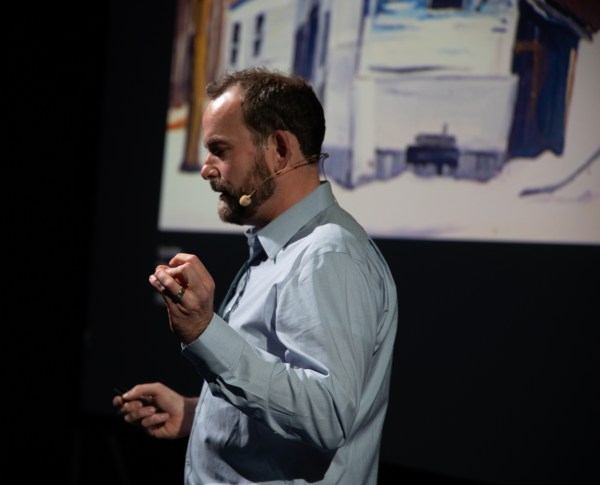
Treadwell described his work as “pairing optical illusions with abstraction … within worlds that exploit the logical tensions between two- and three-dimensional spaces.”
He emphasized his fixation on contradictions, a theme he has explored since he began painting professionally. In his early work, he investigated themes of masculinity and femininity, adulthood and youth, and innocence and tragedy. As the years progressed, he focused on the contradiction between objective and non-objective, and how abstraction could exist alongside naturalism.
Throughout his talk, he referenced artists and mentors who inspired him. Josef Albers, for example, inspired Treadwell’s op art-style pieces, as Albers often played with plane changes that defied the rules of perspective. Professor Treadwell explained how he expanded on these principles (or lack thereof), incorporating his neon color palette and modern subjects.
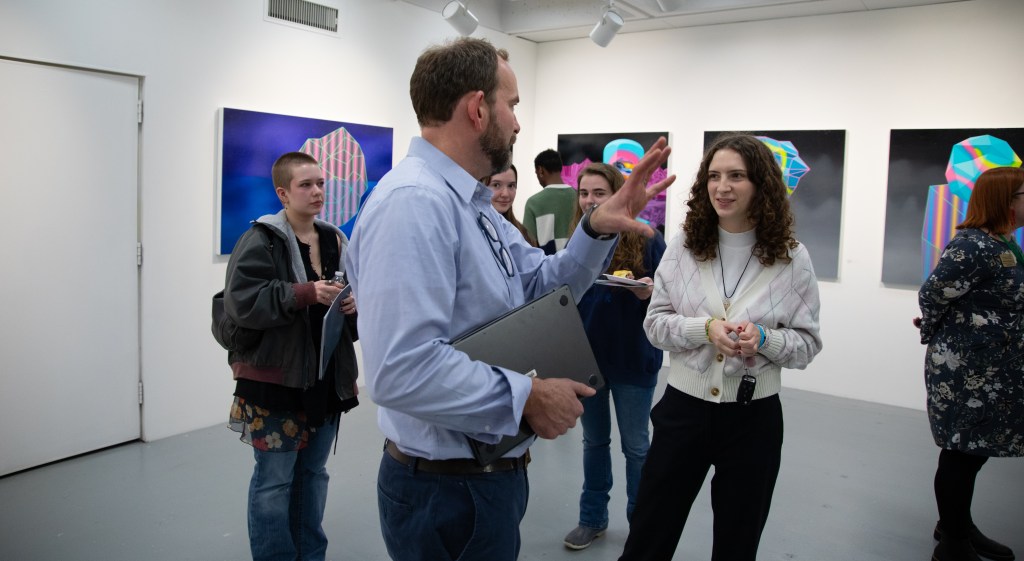
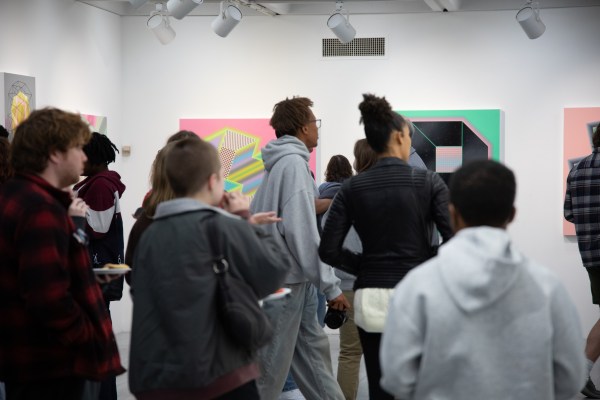
After the presentation, guests were encouraged to view the pieces up close in the gallery. The reception was lively and full of conversations, celebrating Treadwell’s work and the other faculty who made the event possible.
Syd DiTullio, a liberal arts major and a current student of Treadwell’s, mentioned how seeing his personal work helped her better understand his teaching strategies. Lydia Lieb, a close family friend, said she feels his paintings “emanate his personality, the exuberant and bright energy he brings to a room.”
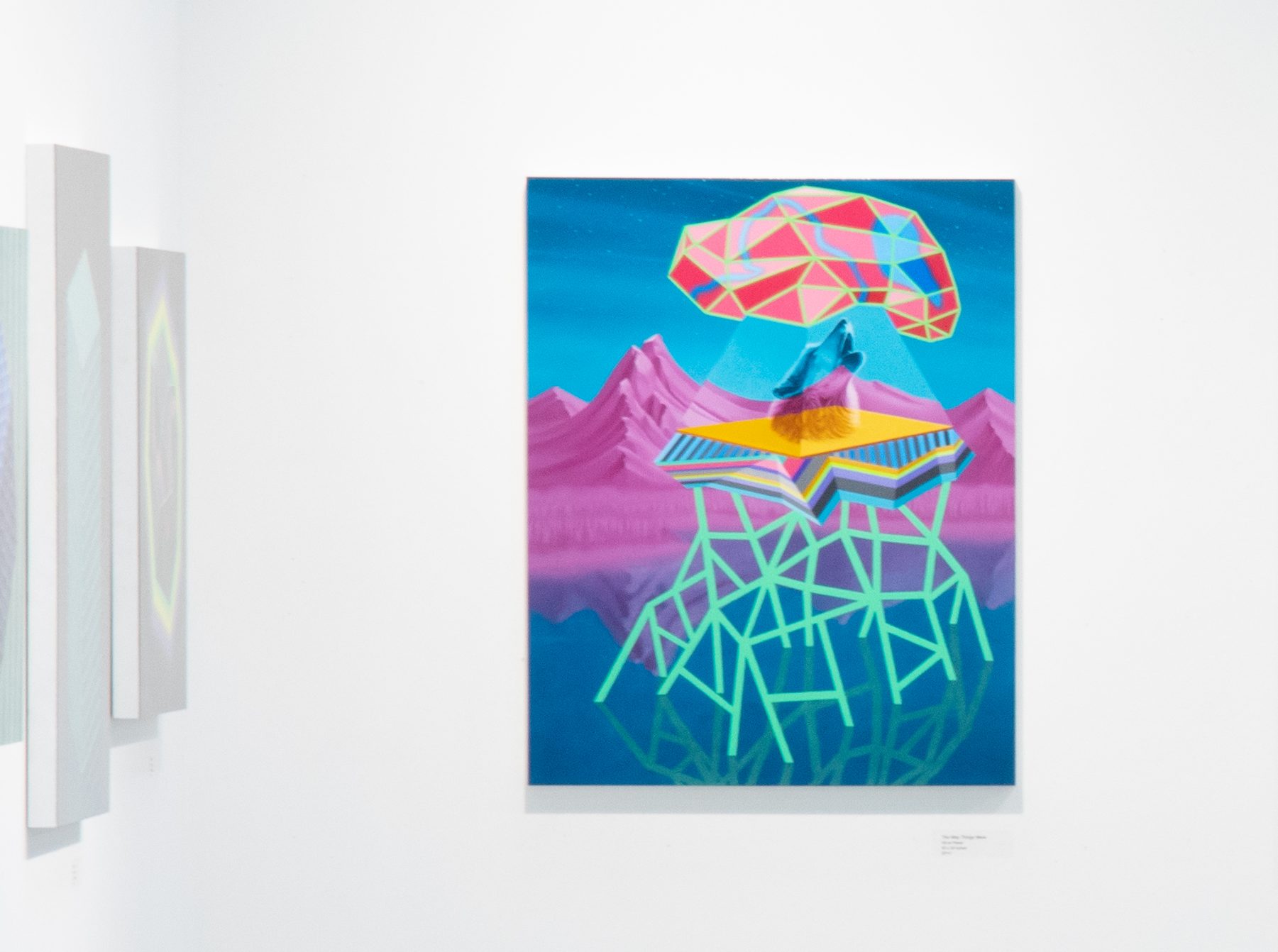
Studio art major Mason Falk shared his insights on a piece titled “The Way Things Were (2014).”
“I like the mountainous background and how the abnormal color palette creates strong contrast from the abstract subject of the painting,” Falk said. When asked what he could take away from the talk for his own practice, he responded, “Finding freedom in how I paint.”
This echoed a sentiment from Treadwell himself, who said, “Once you find freedoms in the studio, it feels fantastic.”
According to Florek, the exhibit was nearly two years in the making. Professor Treadwell took a sabbatical in 2024 to “improve his relationship with his craft” and prepare the most recent set of work on display.
She spoke to Treadwell’s expectations for his students, saying, “He wants [them] to have a deep well of technique and ideas that [they] can draw upon to then transform into what [they] want to do.”
Florek highlighted the juxtaposition between the contained spaces Treadwell creates and the creative freedom he finds within them. “The reason he feels so free is because he doesn’t have to think about the technique, it is so effortless for him,” she said.
When asked if she had learned anything from Treadwell as a close colleague, she responded, “Yeah, definitely. When I came here [to DCCC] I didn’t know anything about contemporary art, and it was largely through talking to him that I started to understand and study the fine arts.”
Treadwell’s paintings are best observed up close. The exhibition offers students and locals an opportunity to exist in the unfamiliar and challenge their perceptions of two-dimensional spaces. Seeing the overwhelming support from faculty and students alike reminded attendees that the arts are very alive and a formative part of an academic environment.

 The Communitarian
Leave a comment