
By Arianna Villanueva and Brigid Amoroso
In the past, Delaware County Community College groundskeepers have tried employing decoy dogs in their ongoing attempt to thwart geese on Marple Campus. Before the decoys, the school paid a company to patrol the grounds with real dogs.
Photography by Charlie McFlea
At its peak, in the late 1990s to early 2000s, the college had more than 70 geese living on the campus. Today, there is still a significant goose problem that the groundskeepers carefully monitor to protect students, faculty, and the campus.
In the spring, DCCC receives a large number of geese looking to mate, an issue that is worsened by people feeding them. Geese presence has become a campus safety issue due to their territorial and aggressive behavior, which can lead to attacks on people who get too close to their eggs.
It is important to provide geese with ample space. If one begins to hiss, forcefully flap its wings, or walk with its neck low toward someone, it is best to stay calm and slowly walk away.
Additionally, feeding geese can cause them to overpopulate an area, which poses not only a physical threat to students and faculty but an environmental one as well. Their droppings can introduce harmful bacteria into water sources like the ponds, which also hold other aquatic animals.
Christopher Sim, the grounds supervisor, originally built wooden dogs to simulate predators, hoping to scare off geese from nesting on campus. Sim has been working for the college since May 1981 and became the lead roughly five years after that. The groundskeeper team is composed of just four men, including Sim. Their office is located in its own building, separate from the rest of campus.
Besides keeping the geese at bay, the groundskeepers designed the college’s outdoor landscape. They maintain the athletic fields, grass, trees, flowers, and trash collection throughout the year. During the winter, they are responsible for clearing snow in the parking lots and on pathways. In the spring, they clear geese nests off the roofs of each building. The crew also helps by performing repairs around the buildings and servicing campus vehicles.
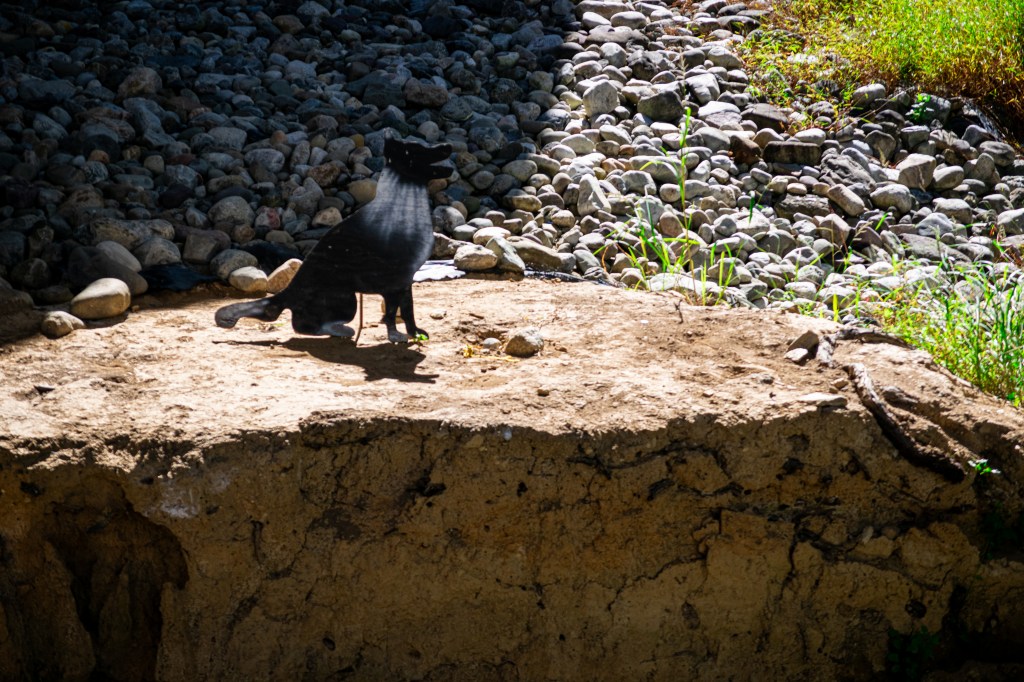
The decoy dogs were cut from plywood and painted like real dogs by the groundskeepers. They were frequently rearranged across campus to scare off the geese and prevent them from nesting.
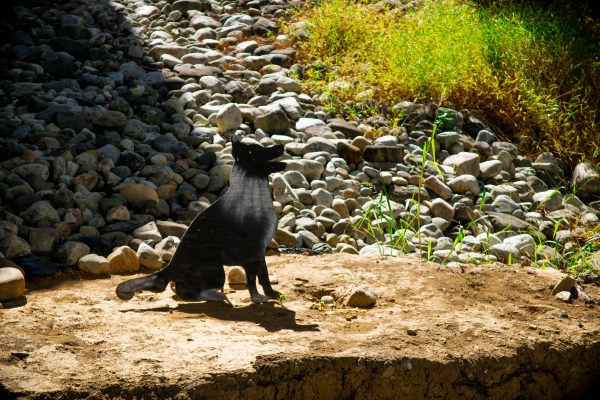
While most decoys are no longer in use, the last dog can be found nestled on a rock overlooking the small stream under the STEM building bridge. This spot is a prime nesting area for geese due to its access to water, vegetation, and concealment from predators. The dog was also left by the groundskeepers to symbolize the work they had done.

When the decoys became less effective, the groundskeepers had to take on a more active role.
“I bark at them and chase them,” Sim said. “People think I’m crazy, but now [the geese] see us get out of our trucks and they start running.”
His fellow groundskeepers also began to intimidate the geese after seeing Sim’s success.
“When we pull up in our maintenance vehicles, the geese recognize us and run away,” he said.
The grounds crew’s vigilance and adaptability have helped them adjust to the goose problem throughout the years.


 The Communitarian
Leave a comment